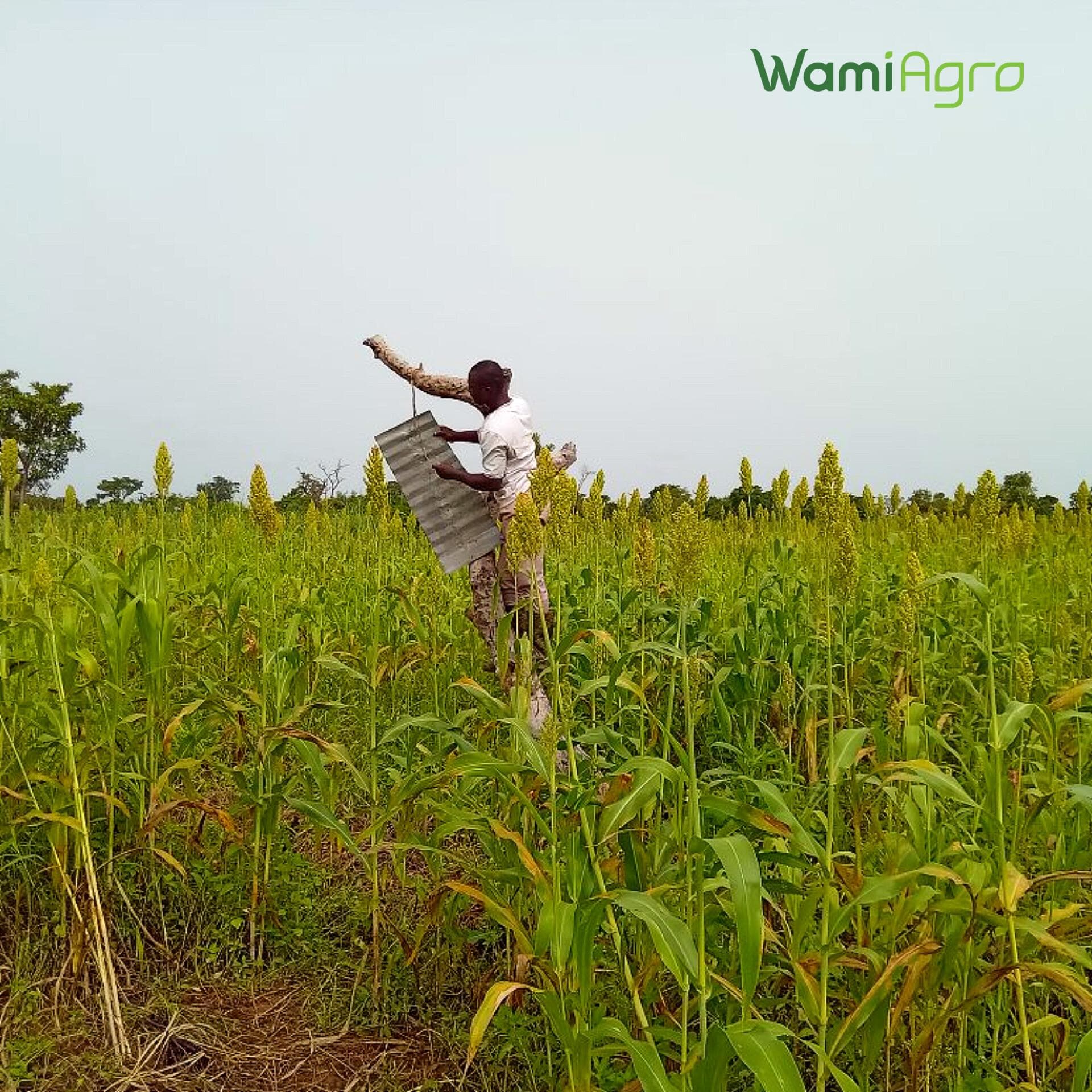
Across Northern Ghana, smallholder farmers continue to face structural barriers that limit productivity and income, particularly restricted access to finance, reliable markets, quality inputs, and technical support. These challenges disproportionately affect women and youth, who often operate with fewer resources and higher production risks.
Through the IDH Grains for Growth Program, WamiAgro has played an active role in addressing these barriers by supporting the development of inclusive, economically viable grain supply chains, with sorghum as a key focus crop.
Tackling the Core Constraints: Credit and Market Access
For many farmers, the absence of input credit and assured markets has historically resulted in low yields and post‑harvest losses. WamiAgro’s intervention focused on closing these gaps by providing farmers with an integrated production and market support model.
Farmers received:
- Land preparation and mechanisation services
- Access to high‑quality seeds and fertiliser
- Agronomic training covering good agricultural practices, crop budgeting, weather information, and post‑harvest loss management
- Structured access to markets through aggregation
Crucially, farmers were linked to a reliable sorghum supply arrangement with Guinness Ghana Breweries Plc., a key partner in the IDH Grains for Growth Program, shifting production from speculative farming to a more structured, market‑oriented approach.
Intentional Inclusion of Women and Youth
In alignment with the gender‑intentional design of the IDH Grains for Growth Program, WamiAgro prioritised the participation of women and young people in farmer selection and service delivery.
In 2023, WamiAgro worked with 1,106 farmers, including:
- 298 adult women
- 206 young women
- 258 young men
Women and youth together represented approximately 70% of all participants.
In 2024, out of 638 farmers, around 60% were women and youth, ensuring that critical production resources reached social groups often excluded from commercial grain value chains.
A collective land size of over 1800 hectares was cultivated.
Climate‑Smart Crop Diversification in Northern Ghana
In Nakpali in the Northern Region of Ghana where farmers are concentrated on maize and soya production, WamiAgro supported farmers to transition into sorghum production in the 2023 and 2024 farming seasons, introducing PAC 501, an early‑maturing and drought‑resistant sorghum variety well suited to local growing conditions. Combined with agronomic training and mechanisation services, this transition strengthened farmers’ resilience while improving grain quality for industrial use.
By aligning crop choice with climate realities and market demand, farmers were better positioned to sustain production and income under changing environmental conditions.
Strengthening Farmer Participation in the Value Chain
Through technical, operational, and organisational support provided to WamiAgro under the IDH Grains for Growth Program, farmers were enabled to:
- Improve productivity through timely access to inputs
- Reduce production risks through training and mechanisation
- Participate more effectively in structured grain markets
Building Lasting Impact
WamiAgro’s work within the IDH Grains for Growth Program demonstrates how intentional design, market linkage, and inclusive service delivery can unlock opportunities for women and youth in agriculture.
By connecting smallholder farmers to climate‑appropriate inputs, practical knowledge, and dependable markets, the initiative has supported a more resilient and inclusive sorghum value chain in Nakpali.